
Yesterday, in Part 1 of What To Do When Your Social Media Campaign Isn’t Working, we talked about how the majority of marketers are disappointed in the results of their social media campaigns. They’ve spent hours setting-up, launching and managing their campaigns, only to be disappointed with the results.
Here are the first three steps I recommended in our social media makeover program yesterday:
Step #1: Collect Data: There’s no way to tell if your campaign is working without checking your data. You probably have Google Analytics installed on your site. Another great place to gather data is from HubSpot’s Marketing Grader tool. We also discussed using Pingdom to test your website’s speed and using SocialMention to find out what people are saying about you.
Step #2: Derive Insights: This is where most people fall flat. They confuse information for insights. The only way you can figure out if your campaign is working is to derive insights from the information you collected, so look at the data, see if you notice patterns, and develop insights from those patterns.
Step #3: Re-Examine Your Goals. A lot of people have fluffy goals for their social media campaigns such as “to build brand awareness” or “to increase engagement.” A more appropriate goal for a social media campaign would be something like “To grow our following on Twitter, Facebook and Pinterest by 20% over the next 12 months in an effort to increase click-throughs on our landing pages by 15%.” The more specific and measurable your goals, the better able you are to see if your campaign is working.
Okay, now that we’ve re-visited yesterday’s post, let’s take a look at where to go next.
Step #4: Conduct Research on Your Customers. Not long ago, I sent out a survey to subscribers to our e-newsletter using Fluid Surveys, an excellent digital survey tool (and slightly more user-friendly than Survey Monkey, in my opinion). The feedback was incredibly helpful because it confirmed a few assumptions I was making about our audience and gave me plenty of new ideas on where we should take the organization in 2013.
If your objective for your survey is to help you collect data that will ultimately lead to a new and improved social media campaign, you’ll want to ask your followers how they feel about your current campaign. You’ll also want to ask them about their expectations for a campaign — why did they follow you in the first place, what can you do better, what can you do without?
Don’t forget to end the survey with questions about their demographics, socio-economic status, location and any other information that will help you understand your customers better. (Put this at the end because some people don’t want to answer it and you’ll lose them if you put it at the beginning.)
Step #5: Re-Examine Your Model. By now, you’re familiar with the hub-and-spoke model for social media, but in the event you’re not, here’s a quick graphic that sums it up.
What you’re seeing above is the classic social media model which is designed to drive prospects to a landing page where they’re converted to customers and ultimately become repeat customers. By using social media to drive prospects to your landing page, you’re setting yourself up for the next step in the program which is…
Step #6: Calculating Your Social Media ROI. Yes, despite what many people may tell you, it is possible to calculate the ROI of your social media campaign by using some simple math. The process involves using your Customer Lifetime Value to calculate how much you’re willing to spend to make a sale (known as your Cost Per Sale).
I’ve written an e-book on this subject that outlines everything you need to know about social media ROI (warning: the book has small doses of sketchy humor in it). If you want to learn just about everything you need to know about calculating your social media ROI, you can download right now and put it into action immediately.
Step #7: Eliminate 25% of What You’re Doing on Social Media. When I consult with people about their social media campaigns, I usually figure out that they’re trying to do too much. Typically, about 50% of what they’re doing needs improvement, about 25% is slightly embarrassing and about 25% is actually doing harm to their brand. So, I often make a suggestion to take down some of their social media platforms.
Remember, your goal is to make every experience people have with you via social media as good as it can be. If it’s not, you’re allowing them to frame a perception about your brand that may not be optimal. So go ahead, take something off your plate. That way, you’ll have more energy and time to do the other things properly.
Step #8: Rebuild Your Program. By the time you’ve reached step 8, you’ll have already figured out where things are working and where they’re not working. Your goal at this stage is to re-build the elements that aren’t working. As mentioned in step #7, don’t be afraid to eliminate 25% of what you’re doing so you can do an A+ job with the remaining 75%.
As you’re re-building, make a commitment to structure your campaign so that it can be tracked and measured. Things that are measured have a tendency to improve. And, besides, by tracking and measuring your results, you’ll be able to accomplish your ultimate goal which is to march into your CEO’s office and say, “Here’s specific, tangible proof that our social media campaign generates a positive ROI for our company.”
That’ll be a great day, won’t it?
The Bottom Line: Most people who run social media campaigns are unsatisfied with the results. If you’re in that camp, then follow the steps outline in today’s post and in yesterday’s post. By doing so, you’ll be able to gather information, derive insights, re-build your campaign and prove to your CEO (and to yourself) that your social media campaign is generating a positive ROI.
Good luck. And keep us posted on how things go! We’d like to hear from you.
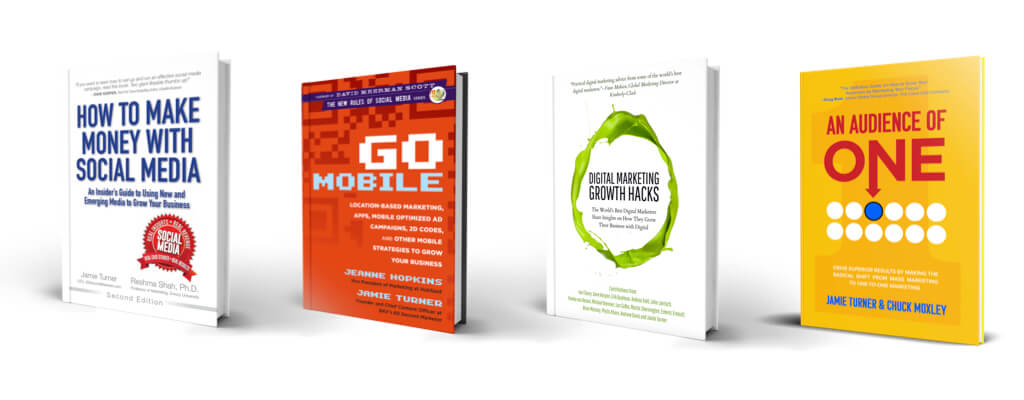
Jamie Turner is the Founder of the 60 Second Marketer and co-author of “How to Make Money with Social Media” and “Go Mobile.” He is also a popular marketing speaker at events, trade shows and corporations around the globe.


Tuesday, January 15th, 2013, 5:59 pm |