
Archive for ‘Mobile Media’

May 12th, 2013

Want to Get Started in Mobile? Learn How From These Top 5 Campaigns.

Mobile MarketingAre you trying to figure out how to use mobile marketing to grow your sales and revenues? Here are five mobile ad campaigns you can use for inspiration.

1. Heineken Hits the Back of the Net with Dual Screen Game

In 2011, UEFA Champion’s League sponsor Heineken introduced an innovative ‘dual screen’ app that let fans interact via their smartphones as games were taking place.

Using the StarPlayer app, viewers were able to react to what was happening in the game by pressing buttons to predict the outcome of set pieces such as corner kicks, penalties and free kicks. Options included a goal, a miss, a save or a clear and if you guessed right, you won points. Bonus questions about the teams were also posted throughout the game and the faster you answered, the more points you scored.

Mobile Marketing Campaigns

The Heineken marketing team were onto a winner with this one. It tapped into the surging popularity of dual-screening, where you use mobile devices to play along with live sporting events and shows, but also the competitive nature of the app meant that people were sharing across social media and forming leagues to see who got the best score, guaranteeing huge exposure for the beer brand.

Want to learn more? Check out the detail on this YouTube video.

2. Starbucks makes grabbing a coffee even easier 

Giant coffee chain Starbucks recently used smartphones to make a coffee on the go even quicker for its US customers. By downloading the Starbucks Card mobile app, customers were able to charge it up with credit and then pay for their drink by simply having their mobile screen scanned at the checkout.

It proved to be a resounding success, with customers excited to have access to a new, faster way to pay and, after launching the app on iPhone, iPod touch and BlackBerry, Starbucks quickly extended the scheme to Android users.

Starbucks Mobile Card

3. Adidas Lights Up New York City

The goal of this campaign was to encourage mobile users to visit New York City’s Penn Station to view an Adidas ‘Light You Up’ promotional light show – an event featuring Argentinean footballer Lionel Messi, who was promoting the launch of the new Adidas Adizero F50 football boots.

In an ingenious piece of marketing, Adidas targeted all mobile users within a 3-mile radius of Penn Station in the hours leading up to the event with an ad that read ‘Adidas and Messi – After Dark Tonight’. Clicking on the banner lead consumers to a landing page where a promotional video described the event’s location and time. The event was a huge success thanks to the mobile marketing campaign drawing in thousands of interested onlookers.

Want to learn more? Click the image below to watch the YouTube video.

Adidas Mobile Campaign

4. Text it like Beckham

This marketing masterpiece from Motorola was aimed at people taking flights from Hong Kong airport and used two of the most well known names in Asia – footballer David Beckham and musician Jay Chow – to enhance the experience of saying goodbye to friends and family.

This worked in two ways – mobile users could either take a picture on their mobile and send it along with a text message, or have a special message recorded by David Beckham and Jay Chow, which were then played to people at the airport via large digital advertising screens.

The campaign was a huge success and had a dual effect – it massively increased the popularity and sales of Motorola and meant that advertising space at Hong Kong airport was suddenly selling at a premium.

Want to learn more? Click the image below to watch the YouTube video.

Mobile

5. BMW

This astonishingly effective example from 2008 saw BMW launch an innovative mobile marketing campaign designed to sell snow tyres to its German customers.

The company used data it had on file – car model and wheel type – to determine which sort of winter tyre would work best on each customer’s car. Attention was focused only on those BMW customers who had owned their car for less than a year and had purchased it in the summer or autumn, as older cars older would already have winter tyres purchased during the previous year.

On the first day of snowy weather in Germany, all the targeted customers received a text message showing an image of their car type with the recommended snow tyres. It also included a link to a site that enabled the customer to experiment with placing different BMW tyres on their virtual car before making a purchase.

This campaign combined great timing with clever targeting of a section of BMW’s customer base that was most likely to buy snow tyres. The results were impressive to say the least – with a conversion rate from messages sent to actual tyres purchased of 30%, whilst the campaign earned a staggering $45m in new business.

These are just five examples from the wide world of mobile marketing, but they all used the medium to deliver a strong sales message that engaged with consumers effectively and led to excellent results. Have I missed some out? If so, please leave a comment and let me know about your favourite mobile marketing moments!

About the Author: Triin Linamagi is a Key Account Manager for mobile marketing company TextMagic. She has previously worked with UK Startups and loves to write about online marketing trends, startups and business development. 

Print Friendly
January 29th, 2013

How CNN Uses Mobile to Drive Cross-Platform Viewership [Interview]

On Air with Jamie Turner

A few weeks ago, I had the pleasure of sitting down with Craig Kirkland, Director of Mobile Products for CNN, and asked him to share some of his experiences in using mobile to drive viewership and awareness for the network. The full On Air with Jamie Turner interview with Craig can be seen below (or on our YouTube Channel). That said, here’s a quick overview of some of the tips and techniques he shared with me during the our conversation.

  1. Know Your Audience: When CNN explores ways to deepen their engagement with viewers, the first thing they do is to understand their audience’s wants and needs. For their mobile audience, it’s important to know demographics, but it’s even more important to understand context. Will the viewer be at their office watching via tablet? At the grocery store watching via smartphone? Or at home in front of their TV? All of these are important considerations for CNN as it expands its reach across multiple platforms.
  2. Test Your Way to Success: In the interview below, Craig discusses the importance of trying new technologies and occasionally failing. In many organizations, experimenting with new technologies is frowned upon. But CNN tries to stay at the forefront of new and emerging media as a way to differentiate itself from the competition. The result is that they’re able to stay one step ahead of many other networks.
  3. Embrace Cross Platform: Research indicates that a growing number of viewers are watching CNN while they use other media (e.g., tablets, smartphones, desktops, etc.). Understanding how consumers use multiple platforms to absorb and digest the news is a critical component of CNN’s future success.

Craig sheds additional light on the these tips in the On Air with Jamie Turner episode below. Watch the episode and find out why CNN continues to stay at the forefront of new and emerging media.

Special thanks to ARKE+threesquared marketing communications for graciously providing the video production on this episode of On Air with Jamie Turner.

Print Friendly
October 2nd, 2012

Mobile Marketing Platforms: What Works and What Doesn’t Work

You’ve probably read a lot of articles about mobile websites, mobile apps, QR codes and other mobile platforms. But you probably haven’t seen anything that lays out what works in mobile and what doesn’t.

Until now.

What follows is an overview of the most important platforms in mobile marketing as well as which of these platforms work and which of these platforms don’t work. I’ve geared this post for the typical marketing executive or business owner who understands the power of mobile but is still trying to figure out how to leverage it for his or her business.

First, a few definitions. Here’s a list of the mobile marketing platforms you’ll need to be familiar with moving ahead. (These definitions are based on a recent document I wrote for the Mobile Marketing Association.)

  • Mobile websites: This is a simplified and streamlined version of your desktop website that’s been designed to appeal to a mobile visitor who is using their smartphone or a tablet to connect with your brand.
  • Mobile apps: These mini-software programs reside within the smartphone or tablet and can be used by brands to provide information or sell products to users. Don’t confuse mobile apps with mobile websites — although they can behave in a similar fashion, mobile websites reside in the cloud and mobile apps reside on your smartphone or tablet.
  • Mobile display (banner) ads: Display ads can link to a mobile website, a mobile landing page, a text message, a mobile coupon, a video, an audio ad or any number of other digital methods used to drive engagement and revenue.
  • 2D (QR) codes: There are a number of different kinds of 2D codes, the most common of which are QR codes, Microsoft TAGs, ScanLife, SPARQCodes and others. Research indicates that 50% of smartphone users have scanned QR codes and 18% have made a purchase as a result.
  • Mobile Paid Search: Similar to desktop paid search except for the fact that it’s customized for mobile. The largest and best-known players in this field are Google, Yahoo! and Bing.
  • SMS and MMS: Short Message Service (SMS) and Multimedia Message Service (MMS) are systems that enable brands to send texts or rich media (graphics, video, audio) to customers.
  • Location-Based Marketing (LBM): There are two sub-categories of LBM which include Location-Based Services like foursquare, SCVNGR and WHERE as well as Location-Based Advertising which uses mobile display ads to geo-target prospects within a certain location.
  • Near Field Communications (NFC): Similar to BlueTooth, NFC uses a small chip embedded in a phone to connect wirelessly to another chip embedded in a kiosk, point-of-purchase poster, debit card terminal or turnstile.

Okay, now for the big question. Which of these mobile marketing platforms work and which of these mobile marketing platforms don’t work?

According to eMarketer, less than 2% of all U.S. marketing spending goes towards mobile advertising. (Other data, provided by the Mobile Marketing Association, indicates that even less — about 0.9% — goes towards mobile.) This is surprising, given the fact that smartphone and tablet users spend about 10% of their digital time using mobile devices.

The good news is that the cost of running a mobile marketing campaign is still relatively low. Rates vary widely, but according to Opera Software ASA, on average it costs $2.85 to reach 1,000 iPhone users with a mobile ad. An ad in a national newspaper can cost as much as $50 to $100 to reach 1,000 readers.

The bottom line is that from a cost point-of-view, there are plenty of deals to be had in mobile marketing. The next logical question, of course, is which mobile marketing platforms are going to give you the best ROI?

Let’s take a look.

Mobile Paid Search. According to The Wall Street Journal, “mobile marketers are plowing the biggest chunk of spending into search ads, where it’s easy to prove a person visited a website or bought a product in response to an ad.”

The article goes on to say that half of all U.S. mobile ad spending goes towards search ads and that Google gets 95% of that. (Yes, 95%. Sorry, Yahoo! and Bing.) Even though mobile search is a relative steal right now, in some categories such as hotels, restaurants and auto insurance, bids for keywords can sometimes be higher on mobile than they are on desktop.

Why would that be the case for hotels, restaurants and auto insurance? Because people do searches for those products when they’re mobile. In other words, someone looking for a hotel, a restaurant or an auto insurance company is more often than not doing their search for those products while they’re out-and-about. (Hopefully, they’re doing their search for the auto insurance company before they’ve had a wreck.)

One other note about paid search — some companies report a much higher engagement rate with mobile paid search than with desktop paid search. Comcast reports that the click-through rate (CTR) on their mobile paid search ads is 4 times greater than their CTR on desktop ads.

Mobile Display (Banner) Ads. Banner ads account for nearly $2 of every $10 spent on U.S. mobile ads, which is one indicator that many mainstream marketers find them very effective.

Mobile display ads don’t always click through to a static landing page. Instead, they can lead to any number of engaging outcomes. The following list of banner ad experiences are based on the mobile marketing guide I wrote for the Mobile Marketing Association mentioned previously:

  1. Expandable Ads: When a user clicks on an expandable ad, the ad expands to cover the entire phone screen. Ads can be animated or can incorporate rich media (e.g., video, audio, animation) to enhance the user experience.
  2. Click-to-Download App: Companies interested in driving adoption of a branded app can use display ads to link directly to the app located in an app store.  Users are driven to app landing pages where they can download the app instantly.
  3. Click-to-Call: This technique simply displays a phone number that users can click to be connected directly to a call center or sales center.
  4. Click-to-Map: Once the prospect clicks on an ad, he or she can be driven through to a map that identifies a store nearest his or her current location. When the prospect clicks on the map, the contact information is displayed on the smartphone.
  5. Click-to-Email: When a user clicks on a display ad an email is displayed that the user can send to friends. The email includes a discount code that can be redeemed at the retail location. By including this “viral” email component in the campaign, marketers can increase the reach and frequency of the display ad program.
  6. Click-to-Video: Rich media is an effective sales tool, whether it’s viewed on a tablet or a smartphone. Display ads that link to video marketing messages increase engagement and deepen the relationship with the customer prospect.
  7. Click-to-Social: If you’re interested in integrating a social component to your mobile campaign, you can incorporate a click-to-social aspect to it. Visitors can let friends and others know about their affinity to your brand by connecting them to your social networks via a mobile display ad.

According to research conducted by Marin Software, the average CTR for a banner ad on a desktop is 2.39%. For a smartphone the CTR is 4.12%, and for a tablet computer the CTR is 3.12%. What does that add up to? In most cases, it adds up to a positive ROI — especially if you incorporate rich media (audio, video, animation) into the ad.

Mobile Apps: Unfortunately, if you think you’re going to make a million dollars on your next mobile app startup idea, think again. Mobile apps are best for brands with a built-in user base. That doesn’t mean that there won’t be the occasional mobile app idea that doesn’t break through (can anyone say Instagram?), but it is to say that the odds of retiring on your mobile app startup are pretty slim.

All that said, mobile apps can be terrific for brands that have an existing customer base. For a case in point, just look at what Domino’s Pizza or Starbucks have done with their apps. They developed apps designed to deepen their relationship with customers and, in the process, reduce customer churn. (To find out more about the Domino’s and Starbucks apps, read “14 Mobile Marketing Techniques You Can Steal from the Fortune 500” on the 60 Second Marketer blog.)

QR Codes: Okay, first some news about QR codes that will surprise some of you and not surprise others — QR codes will be dead and gone within 2 to 3 years. They’ll be replaced by better options such as Google Goggles or Near Field Communications.

In the meantime, they’re still an effective platform. In fact, research conducted by CMBInfo.com indicates that 50% of smartphone users have scanned QR codes and 18% have made a purchase as a result.

What are some ways you can use QR codes to grow your business? Here are 13 different approaches I mentioned in a previous post on the 60 Second Marketer called “13 Ways Businesses are Using QR Codes to Grow Revenues.”

  1. Real Estate Agents are using 2D codes to provide drive-by visitors access to videos that show the inside of homes and buildings. That way, interested parties can see the interior without having to wait to set up an appointment.
  2. BestBuy has added 2D codes to their in-store fact tags to let consumers see information about their products. Customers can also save the information to review at home later or to buy the product instantly via smartphone and have it delivered to their homes later.
  3. Delta and other airlines use 2D codes in conjunction with their mobile apps. Users receive their boarding pass via the app and use the 2D code on the boarding pass to check-in at the airport.
  4. Trade Shows, Events and Conferencesare using 2D codes on name tags. That way, participants can scan the codes and download the person’s contact information instantly. No more business card swapping.

    Scan this QR Code to see dozens of ideas on how to use mobile marketing to grow your business.

  5. Esquire Magazine used 2D codes to give readers more information about fashion items featured in their magazine. Users can link to the designer’s website to place an order for a product they saw in the magazine.
  6. The Good Cook on BBC1 in the U.K. provides 2D codes so viewers can see all the ingredients and the method of cooking that the chef uses.
  7. Hotels provide 2D codes in rooms to highlight local attractions with coupons to theme parks and restaurants.
  8. The U.S. Department of Transportation and the Environmental Protection Agency are proposing 2D code fuel economy labels on the window of every new vehicle in dealer showrooms.
  9. The New York Times Magazine put a 2D code made entirely of balloons on the cover of their magazine. Users who scanned the 2D code were driven to a special mobile web page promoting their 10th Annual Year in Ideas issue.
  10. McDonald’s uses 2D codes in Japan to provide additional product information and promotions for their menu items.
  11. Bosch VitaFresh refrigerators in Germany placed over-sized, wrapped packages of meat purportedly from dinosaurs, mammoths and saber-toothed tigers in supermarket freezers. The 2D codes on the packages linked to product information about their refrigerators, resulting in over 75,000 views from customers in stores.
  12. A bank in Ireland provided maps of the Emerald Isle to customers. The map referenced a list of restaurants from across the country. Each restaurant had a 2D code that drove people through a Google map of the restaurant’s location.
  13. Bigmouthmedia in Edinburgh, Scotland includes a 2D code on their Google map location, thereby giving people searching for them with a regular computer access to their website via mobile, too.

SMS isn’t the Bright, Shiny, New Object, but it Still Works. There are other mobile marketing platforms out there that get more attention than SMS, but that’s not to say it isn’t an effective tool. In fact, just about every Fortune 500 company still uses SMS to engage customers and grow their business.

What are some of the techniques used in successful SMS campaigns? Here are just a few, as outline in one of my previous posts called, “12 Crazy Easy Ways to Use SMS to Grow Your Business.”

  1. Text-2-Join: This is perfect for non-profits, trade organizations, big brands (like Coke or The Home Depot) and just about any organization that wants to stay connected to its customers. Just encourage people to text their request to join a club, charity or other entity linked to a brand.
  2. Text-4-Info: These are keywords that reply automatically without a need for opt-in confirmation. For example, you could provide directions to different events at a trade show by using Text-4-Info.
  3. Text-2-Vote: Poll questions that ask users to respond to A, B, C or D. This is a great tool for B2C as well as for B2B. If you’re giving a presentation at a trade show, just ask people in the audience to text their vote — t’s a great way to keep them engaged.
  4. Text-4-Survey: This is more in-depth than Text-2-Vote. Best of all, this approach can change the poll questions based on the user’s previous answers. It’s perfect to get in-depth, segmented responses to surveys.
  5. Text-2-Win: A system that replies with “winner” and “loser” notifications based on odds of winning.
  6. Text-2-Give: The American Red Cross did a wonderful job with their Haiti campaign by allowing people to add $10 donations onto their phone bill by simply texting HAITI to a specific short code.
  7. Auto-Campaigns: These are timed messages that follow a subscriber’s opt-in request for information. So, for example, they get a message immediately after opting-in, then every 15 days after their initial opt-in.
  8. Targeted Messaging: This approach lets you schedule a campaign message to “ALL,” “GROUPS,” or “INDIVIDUALS.” It’s perfect for marketers who want to segment their campaigns.
  9. Personalization Tokens: This gives you the ability to personalize a message based on the person’s name, email address, location, etc.
  10. Alias Keywords: Create and “catch” alternate spellings and phrases and link that to the actual keyword.
  11. Location-Aware SMS: Create geo-fences and deliver custom message flows based on a subscriber’s location. Geo-fences can target people within a certain radius of your store, or people in a certain neighborhood.
  12. Facebook Tabs: These are custom tabs installed on Facebook pages that collect profiles and opt-ins.

Now for the Big Question: What Doesn’t Work in Mobile Marketing? It’d be nice if my section on what doesn’t work in mobile marketing were as long as my section on what does work, but the nature of a platform that doesn’t work is that it gets put into the graveyard and we don’t talk about it much.

That said, there are several things you should keep in mind when developing your next mobile marketing campaign.

  • Don’t use SMS to SPAM: Almost all SMS providers I’ve come across are legitimate entities, but occasionally you’ll hear about an SMS provider who has some secret sauce that bypasses the double opt-in rules that legitimate providers use. If you’re approached by any company that has found a way to bypass these rules, stay away. Your brand is worth much more than any gains you’ll make by spamming unsuspecting prospects.
  • Don’t Send QR Code Visitors to a Bad Landing Page: If you’re going to ask someone to take the trouble to scan your QR code, the least you can do is reward them when they get there. Some companies are still using QR codes to drive people to their home page which is a waste of everybody’s time. Instead, use a QR code to drive people to a page where they can get a discount coupon, see a map of your location or enter a promotion. (For more on QR codes, read “How to Generate a QR Code Right Now” on the 60 Second Marketer blog.)
  • Don’t Ignore the New Platforms as they Come Online. There are several mobile marketing techniques coming online right now that will take the world by storm over the next few years. The first is hyper-local, which is the process of using geo-locational technology to make the ads people read even more relevant.  Another is behavioral targeting, which is the technique of serving up ads based on a visitor’s previous mobile behavior. And another is location-based marketing which is already being used in the form of Yelp, foursquare and SCVNGR, but will become even more mainstream in the years to come. The key here is to not ignore these new tools as they come online. By diving in early, you can differentiate your brand and stand out from the crowd.

We’ve covered a lot of ground in this post, so feel free to print it out or forward it to others. Better still, sign up for our e-newsletter where we share information like this several times a week.

Oh, one other thing. Feel free to add your feedback and experiences in the comments section below. It’s always great to hear from the 60 Second Marketer community and to see what their mobile marketing experiences have led to.

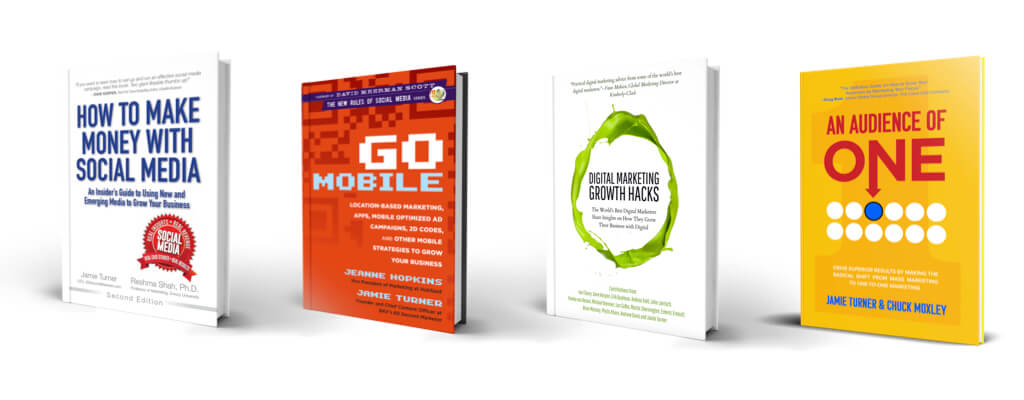
Posted by Jamie Turner, Founder of the 60 Second Marketer and co-author of “How to Make Money with Social Media” and “Go Mobile.He is also a popular marketing speaker at events, trade shows and corporations around the globe.
Follow Me on Pinterest

Print Friendly
September 20th, 2012

The 3 Characteristics of a Successful Mobile Marketing Campaign

What do all successful mobile marketing campaigns have in common? What are the fundamental characteristics that effective mobile marketing campaigns share? What are the techniques these campaigns use that make them different from other, less effective campaigns?

You may be surprised to hear that, given the breadth and depth of the mobile marketing landscape, the number of essential characteristics that successful mobile marketing campaigns have in common can be distilled down to three. Once you strip away the façade of many successful campaigns, what you uncover are these three key characteristics: measurability, consumer insights, and innovation.

Characteristic 1: Measurability

A sure sign that a campaign will fail to reach its full potential is when a marketing director or business owner launches it without setting up a system to track the results.

Many businesses catch wind of a new and emerging trend like mobile marketing and jump into it before mapping out a strategy or developing tracking mechanisms. Typically, they develop a campaign based on a tactical or executional basis. A common refrain goes like this: “Let’s dive into foursquare. The CEO just asked me about it, so let’s get one running ASAP.”

This ready, fire, aim approach to mobile marketing sets people up for failure. No sooner have they launched the campaign on a tactical whim than the CFO walks in and asks for an ROI analysis of it. Since a tactics-and-execution-first approach was taken to set it up, probably very little effort was put into defining tracking mechanisms. The end result is a campaign that flounders because nobody can accurately assess whether it is successful or not.

Successful campaigns start with an agreement about which metrics will be used to track the results. Then a baseline is established; thus, if one of the metrics that will be used is number of clicks to the mobile website, a baseline for that metric needs to be established prior to launching the campaign. Here’s an example: If a mobile website generates 1,000 visits a week prior to launching a paid search campaign, and it jumps up to 1,250 visits per week following the run of that campaign, then you know it generated a 25 percent increase in visits to the website (assuming all other variables remained the same).

Characteristic 2: Customer Insights

Understandably, it’s easy to get swept up in the enthusiasm surrounding a new marketing trend, especially one as exciting as mobile. Consider what happened with social media: Businesspeople were so enthused about its potential that they started to believe it was going to solve all their marketing problems. The thinking was, if we just upload a few YouTube videos and create a Facebook page, we’ll be off to the races.

The truth is, it takes more than uploading a few YouTube videos and creating a Facebook page to make a successful social media campaign. Similarly, it takes more than creating a mobile website and running a mobile search program to produce a successful mobile media campaign. It takes careful planning and development, plus valuable consumer insight.

This blog post is based on an excerpt from “Go Mobile,” a #1 best-selling mobile marketing book co-authored by Jamie Turner, Founder of the 60 Second Marketer.

Companies that focus on the technology first and the consumer second are destined to fail. Successful mobile marketing campaigns start by gaining consumer insight; they then use that insight to grow their sales and revenue. They analyze how their customers and prospects think and behave, then try to figure out how mobile marketing can be used to leverage those thoughts and behaviors.

Fandango, the movie ticketing destination, for example, worked to analyze the behavior of people visiting its mobile app. It realized that potential ticket buyers wanted three things: the ability to check movie times, the ability to purchase tickets, and the convenience of not having to stand in line to pick up their tickets when they arrived at the theater. So Fandango created an app that meets those wants: It gives moviegoers the ability to check movie times and purchase tickets, and sends them a QR code they can scan at the ticket booth. By drilling down and analyzing the consumer thought process, Fandango found the way to deliver a superior ticket-buying experience to its customers and, ultimately, improve customer loyalty.

Characteristic 3: Innovation

No doubt you’re excited about all the possibilities for business growth offered by mobile marketing. And based on what you’ve read in this book, you now know that many of your competitors are probably still lagging behind in this trend. So it may be tempting, once you’ve created your mobile website and perhaps even developed a mobile promotion, to get complacent and comfortable with your accomplishment. That would be a mistake. Successful campaigns typically continue to add an innovative element to the mix. They do more than, say, offer a free product sample for people who scan their QR code. Instead, they may engage their consumer in a new and innovative way that leverages the unique characteristics of mobile devices.

Now that we’ve introduced these unique characteristics, let’s take a quick look at each of them before we analyze how they’re being used in mobile marketing campaigns around the globe. As mentioned, mobile devices have GPS technology that allows users and marketers alike to target prospects based on their locations. And recall that a mobile device’s accelerometer can be used to track the speed at which someone is traveling, and even to sense when the mobile device is being shaken. The compass lets marketers find out which direction the user is facing (always helpful for apps like Yelp that provide restaurant ratings to the user based on which direction they’re facing).

More, mobile devices have the capability to scan 2D codes, share data and information, and recognize when the mobile device is being held close to a person’s body. Mobile devices also can adjust screen brightness based on the ambient light. They also can transfer information wirelessly using NFC or Bluetooth technology.

In a nutshell, the most effective mobile marketing campaigns use these unique characteristics to provide consumers with an experience that’s memorable. They leverage these attributes in order to connect with consumers more deeply than campaigns that follow traditional, more well-worn paths.

A Few Final Thoughts

If you’re reading these words, the odds are you have more than just a passing interest in mobile marketing. You’re excited about the prospects this new tool can drive to your business. You might even have some specific ideas for campaigns you’re thinking about launching as a result of reading this book.

But there’s one last point we need to express to ensure that your mobile marketing campaign will not just work, but succeed. It’s the most important point of all—which is why we’ve saved it for last. That final point is for you to take action. Don’t just think about, and talk about, mobile marketing. Don’t just strategize about it, either. Take action!

We’ve been tossing around two phrases to each other as we’ve been writing this book. The first is GSD, which stands for get stuff done. (GSD actually stands for something a little edgier than that, but we’re too polite to tell you). The key thrust of GSD is that it motivates people to take action instead of just talking about taking action. There’s a big difference.

The second phrase is: It’s better to get 10 things done than to get 1 thing done perfectly. Now, we realize that if you’re a brain surgeon, this advice does not apply to you. But marketing isn’t brain surgery; it’s a much more flexible profession. And it happens much more quickly. That means if you don’t keep the ball moving forward, the business world will pass you by. Quickly.

So keep those two final points in mind as you take steps to launch your mobile marketing campaign. By doing so, we’re confident you’ll be able to launch your campaign and still have time to tweak and adjust it while your competitors are stuck in the planning stages.

Good luck. Keep us posted on your results. And let us know what you’re doing in the amazing and exciting new world of mobile marketing.

Posted by Jamie Turner, Founder of the 60 Second Marketer and co-author of “How to Make Money with Social Media” and “Go Mobile.He is also a popular marketing speaker at events, trade shows and corporations around the globe.
Follow Me on Pinterest

Print Friendly
September 3rd, 2012

50 Insanely Simple Ways to Grow Sales with Mobile Marketing

A lot of people are intimidated by mobile marketing because they think it’s complex and technical. By comparison, when social media came along the general response was “I already know how to use LinkedIn and Facebook. How hard can social media be?” But when mobile marketing took off, many people were left saying, “Sheesh. That sounds difficult. I’m going to sit on the sidelines for a while to see if this thing is for real.”

Well, mobile marketing is for real. Just look at all the Fortune 500 companies that are devoting hundreds of millions of dollars to it. But the good news is that you don’t have to be a Fortune 500 company to take advantage of everything mobile marketing has to offer. Better still, using mobile marketing for business is insanely easy to do. Seriously, it’s not all that complex once you get the hang of it.

So, with that in mind, I wanted to share 50 insanely simple things you can do to use mobile marketing for your business. This handy (and print-worthy) list should get you started in mobile with relative ease.

  1. Understand the Landscape. There are only 8 primary tools you need to know about when it comes to mobile marketing. I go through them pretty thoroughly in my book Go Mobile (get a free chapter by clicking here). The tools are: 1) Mobile Websites, 2) SMS, 3) Mobile Banner Ads, 4) Mobile Paid Search, 5) Mobile Apps, 6) Location-Based Marketing, 7) Near Field Communications and 8) QR Codes
  2. Learn the Facts. Jeanne Hopkins and I created a SlideShare deck for HubSpot called “50 Amazing Facts About Mobile Marketing” that’s been viewed more than 90,000 times. If you haven’t already seen this deck, it has tons of amazing and incredible facts about the impact mobile is having on our society.
  3. Mobilize Your Website. If you have an ad agency or web design firm, they’re probably already working on your mobile website. (And if not, hop to it.) But if you’re a start-up, small business or blogger, then read “How to Build a Mobile Website” for easy tips on setting up your mobile site.
  4. Test Your Mobile Site. Google has a special tool that shows you how your site renders on various operating systems. It also provides tips on how to improve the functionality of your site.
  5. Use a Mobile Website Grader to Find Out How Your Mobile Site Stacks Up. Marketing Grader is HubSpot’s upgrade to their Website Grader tool. Included in the  tool is a mobile grader that can give you insights to how well your mobile website is performing. Another useful tool is MobileGrader from our friends at BlueTrain Mobile. Both tools are worth checking out. (Disclosure: I have relationships with both HubSpot and BlueTrain Mobile.)
  6. Add Something Fun to Your Mobile Website. It’s a good idea to reward people who visit your mobile website with something fun and engaging. Perhaps a mobile coupon is in order? Or maybe a mobile trivia game will do the trick. No matter what, try to have a little fun with your mobile website.
  7. Optimize Your Mobile Website with Mobile-Specific Keywords. Don’t forget to add mobile-specific keywords to your mobile website or your mobile blog. For example, if you own an Italian restaurant and have a blog, then you’ll want to add keywords that people will be searching for in your content. In other words, don’t just use “Italian Restaurant,” also use “Italian Restaurant Locations,” “Italian Restaurants on Peachtree Street,” and “Italian Restaurants in 30342 Zip Code.” By adding location-based keywords, you’re targeting the mobile visitor which ultimately drives customers to your door. (Tweet this post to your friends by clicking here.)
  8. Learn How to Generate a QR Code. QR codes won’t be around forever, but they can still be used to engage customers. Ready to create one? Just copy any URL and paste it into the QR code generator we have on the bottom right-hand side of the 60 Second Marketer blog. It’s crazy easy to do and you’ll figure out a lot just by playing around with it.
  9. Drop a QR Code into Your Next PowerPoint Presentation. When I conduct mobile marketing webinars for T-mobile, Coca-Cola and other companies, I drop a QR Code into the presentation. The first person to scan the code gets an autographed copy of Go Mobile. It’s a great way to engage an audience via mobile marketing.
  10. Add a QR Code to Your Business Card. You can create QR codes that provide your contact information to the people who scan them. That’s a great way to connect with people and provide them a link to your blog.
  11. Record a YouTube Greeting and Link it to a QR Code. Want to provide visitors to your website some extra love and attention? Create a video greeting on YouTube and link it to a QR code on your website. When people scan the QR code, they get a video greeting from you — ideally with a special discount or coupon offering. How cool is that?
  12. Use TwtPoll to Create a Mobile Survey. When I do a keynote at an event or conference, I’ll use TwtPoll to create a survey which can be accessed via smartphone. The audience can take the survey from their smartphones and I show the results in real time on the screen.
  13. Incorporate Mobile into Your B2B Marketing Campaign. Mobile isn’t just for B2C. In fact, in some ways, a B2B mobile campaign has greater impact because it’s unexpected. So put a QR code at your receptionists desk that offers a special thank you gift for people who scan the code. Or, create an employee scavenger hunt that uses QR codes as part of the clues. Or use any of the techniques below to engage your B2B clients. They’ll be impressed you’re using a cutting edge technology for a B2B marketing campaign.
  14. Create a Mobile Google+ Page. If you don’t already have a Google+ profile, it’d be a good idea to create one. Google is getting deep into mobile, so where Google goes, you should go, too. Best of all, Google makes sure your profile renders properly when people access it from their smartphones.
  15. Create a Mobile Banner Ad Campaign. Mobile banner ads are surprisingly easy to create. If you’ve got a budget, the simplest thing to do is to call your ad agency and develop a campaign through them. Alternatively, you can go straight to a mobile ad network which will place your ads on hundreds or thousands of mobile websites across the nation. Some of the mobile ad networks I’m most familiar with are 4INFO,  Jumptap, AdMob and Millennial Media.
  16. Link Mobile Banner Ads to Email Campaigns. You can run a mobile banner ad that, when clicked, creates an email instead of loading a web page. So, for example, when a person clicks on a banner ad from their smartphone, an email pops up on their screen that they can forward to friends. The email might say, “Meet me at Bob’s Italian Restaurant and we’ll all get 10% off our bar tab.” For more information on this technique, check out some of the case studies on the MobClix website.
  17. Create a Mobile Banner Ad that Only Targets Certain Demographics. Did you know that you can create a mobile banner ad campaign that only targets people in airports? Or only people who have visited ESPN.com (or some other website) in the past 2 weeks? Or only people who use the Android, iOS or Microsoft operating system? Yup. It’s crazy easy to do, too. Just ask your ad agency or mobile ad network to show you how. (Tweet this post to your friends by clicking here.)
  18. Send a Mobile Banner Ad to People within a 5-Mile Radius of Your Store. Mobile banner ads are a lot of fun because you can use geo-locational technology to target people within a certain radius of your retail locations. It’s perfect for restaurants, coffee shops, bookstores and other retail locations that want to attract local customers who are near their store.
  19. Run a Mobile Banner Ad that Adds an Event to the Visitor’s Calendar. This is another fun trick that the folks at MobClix came up with and it works like this — someone visiting a mobile website sees a mobile banner ad on their smart phone. The banner ad is for your company and it says, “Mark Your Calendar for Our Grand Opening Event!” When the user clicks on your banner ad, the event is automatically added to their calendar. Pretty cool, eh?
  20. Build a Mobile App. There are a variety of well-established companies that can help you build an app. The best ones I came across when we wrote Go Mobile were ShoutEm, MobileRoadie, AppMakr, Appcelerator, MobBase and Mippin.
  21. Provide Customers with an Interactive Map of Your Facility via Mobile App. That’s what Mobile Roadie did with their app for the San Diego Zoo. The most popular section of the San Diego Zoo app was Animal Cam where fans could watch and learn about their favorite zoo animals in real-time.
  22. Build an App for a Client. If you’re a marketing communications firm, web developer or ad agency, you might find ShoutEm’s platform to be just the ticket. They have a system that allows you to create apps for clients and white label them from your agency.
  23. Communicate and Manage Employees via Mobile App. E-bay employees can access the company directory, campus map, calendar, stock feed and more all from a sophisticated app that was built using the Appcelerator platform.
  24. Spread the News via Mobile App. Mippin, a UK-based app development company, helped The Daily Star stay connected with readers by creating a simple, easy-to-use app that shares Daily Star content via mobile device.
  25. Create an App that Prevents Customer Churn. One of my favorite uses of an app is the one Domino’s created for their mobile audience. It’s surprisingly easy to use and, best of all (for Domino’s), once you’ve gone through the set-up process, the odds of going to a competitor’s app drop dramatically. It’s a great way to reduce customer churn.
  26. Create a Customized App for Your Event or Trade Show. AppMakr helped The Inc. 500 Conference create an app that enabled attendees to navigate the conference with ease. It was a great way for the event to stay connected with their audience.
  27. Send Customers Special Discounts When They Enter Your Store. Digbyhas a geo-fencing solution that targets customers once they’ve entered your store. Once a shopper has downloaded your app, you can send the shopper rich, relevant messages when they’re nearby. Geofences can be set up by the retailer to offer consumers a discount or alert them to something happening right then in the store.

    One of the best things about mobile marketing is that you can send SMS, banner ad and other campaigns only to people who are within close proximity to your store.

  28. Launch an SMS Campaign. As our friends at SumoText will tell you, only 6% to 15% of all mobile phone users in the U.S. have QR code readers on their phones, but virtually 100% of them can read texts. Launching an SMS campaign is crazy easy — but you’ll have to go through an SMS service provider like SumoText to get it going.
  29. Use SMS to Stay in Touch with Customers. Airlines, doctor’s offices and restaurants are using SMS to remind customers about their flights, appointments and reservations. It’s a great way to stay connected and keep people happy. For more on using SMS to connect with customers, check out MobileStorm, one of the nation’s largest SMS and digital marketing service providers.
  30. Create an SMS Campaign that Only Targets Customers Near Your Store. In the UK, Subway restaurants provided discounts to people who opted-in to receive SMS messages when they were within proximity of a Subway restaurant. The promotions used geo-locational technology to target opt-in participants based on their location. (Tweet this post to your friends by clicking here.)
  31. Target Home Buyers Who Want More Information. If you’re in real estate, then you can use SMS to provide in-depth information about specific homes. Prospective buyers simply text a short code to your number and can receive detailed information about the home. For more information on this technique, visit the Anchor Mobile website.
  32. Connect Your SMS Campaign to Your TV Campaign. Commercials for one retailer in Minneapolis encouraged people to text “tent” to get a discount coupon for a weekend tent sale. That way, potential customers had a mobile coupon on their smartphones that they could keep handy until they visited the store.
  33. Use SMS to Send Emergency Alerts. Colleges and large corporations are now using SMS to alert people to possible emergencies.
  34. Grab a Star Star Code. Remember all those people who got in early on the 1-800 craze? They grabbed numbers like 1-800-INSURANCE and sold them back to insurance companies at a premium. The same might be happening with Star Star codes which allow people to dial **INSURANCE (or something else) to connect with brands. For more on Star Star codes, click here.
  35. Accept Credit Cards with Your iPhone, Android or iPad. If you’re a small business or a non-profit, you may have been intimidated by the complexity of accepting payments via credit card. Good news — Square offers a crazy simple solution for iOS and Android that simply connects to your smartphone or tablet. Check it out. And star making some money!
  36. Integrate Your Social Media Campaigns with Mobile. Facebook, LinkedIn, Twitter, Google+ and other social media platforms are all over mobile. Keep that in mind when posting updates — since people reading your social media updates might be mobile, you can encourage them to stop by your retail location with time-sensitive promotions sent out via social media.
  37. Run a Mobile Paid Search Campaign. Mobile paid search is a hidden gold mine. It’s hard to make a killing with desktop search anymore because the cost of keywords has been driven up. But the cost for mobile paid search is still low, so you can have a pretty good ROI. For more on this, read “5 Things You Need to Know Before Launching a Mobile Paid Search Campaign.” 
  38. Keep Prospects In-Store with Barcode Scan Promotions. Tired of having prospective customers enter your store, look at the merchandize, then go home to order it on Amazon? It’s called the Showroom Effect and one way to combat it is to provide customers who have downloaded your app a special discount when they scan a barcode on certain items. You don’t want to offer the discount on all items, just ones they can order online. For more on this technique, check out this page on the iLoopMobile website.
  39. Claim Your Business on foursquare, SCVNGR and WHERE. These are three of the best-known location-based services. Your first step is to register your business with them. They’ll need to confirm that you’re the legitimate owner or manager of the business before you can start using their services.
  40. Create a Check-In Promotion. Most people use tools like foursquare as a customer loyalty program. In other words, they only reward customers for coming back several times in a row. But I’d suggest rewarding first-time users — don’t offer a discount for someone who checks in 30 times. Instead, offer a discount for someone who checks in the first time.
  41. Create Deals Around Big Events. Is there a big event happening in your neck of the woods? Then create a check-in promotion around that event. It’s a great way to leverage the buzz around a concert, sports event or festival for your benefit.
  42. Leverage Deal-of-the-Day Services. Most people think of Groupon, Google Offers and Living Social as desktop platforms, but they’re perfectly suitable for mobile promotions. In fact, they’re probably better suited for mobile promotions, so don’t be shy — check ‘em out.
  43. Promote Group Check-Ins. If you’re going to use foursquare to promote check-ins, why not encourage groups of people to check-in? That way, you’ll get more bang for your buck.
  44. Interact with Customers. If a customer has used a location-based service to check-in at your store, give them a discount — but only after they’ve interacted with your wait staff by creating an origami napkin or completed some other fun task.
  45. Create a Sense of Urgency with Your Mobile Promotions. Research indicates that putting a time limit on coupons drives up redemption. So, if you’re going to run a promotion on WHERE, then you’ll want to use phraseology like “limited time offer” or “expires soon” as part of the promotion.
  46. Create a Bounce-Back Coupon. It’s one thing to provide a mobile coupon to customers who are in your store, but it’s even better to provide one that encourages them to come back for another visit at a later time. These bounce-back coupons are a great way to generate repeat visits.
  47. Offer a Discount for Filling Out a Survey. Interested in getting customer feedback? Then provide customers 10% off their desert once they’ve filled out a mobile survey using a tool like CheckBox.

    Consumers can tap their NFC-enabled phones against a sticker to get instant access to tourist and store information.

  48. Use Near Field Communications (NFC) to Provide Tourist Information. NFC hasn’t quite caught on everywhere yet, but fifty businesses in the Australian alpine resort of Falls Creek have been equipped to provide information to visitors via NFC. The system enables visitors with NFC phones to connect with Falls Creek’s businesses by tapping their handset against NFC stickers located at business premises. Tapping a tag opens up a mobile site which provides access to a range of local services.
  49. If You’re a Retailer, Learn More About the Mobile Wallet. Google, Wal-Mart, 7-11 and other companies are starting to develop NFC solutions that will allow people to pay for items by waving their phone over NFC-enabled merchant devices. The final technology is still a long way from going mainstream, but anything that Google is involved in is worth checking out.
  50. What Have We Missed? There’s certainly some mobile marketing tools or techniques that I’ve missed. It’s a technology that is rich with possibilities. Can you do me a favor? Let me know your thoughts about mobile marketing or about promotions I may have missed in the comments section below. It’ll be great to get your feedback. (Tweet this post to your friends by clicking here.)

The bottom line is that mobile marketing can be insanely simple to use, so don’t be intimidated. Dive right in. And let us know about your experiences using this amazingly important new technology.

About the author: Jamie Turner is the Founder of the 60 Second Marketer and co-author of “How to Make Money with Social Media” and “Go Mobile.He is also a popular marketing speaker at events, trade shows and corporations around the globe.

Print Friendly